1. Introduction: The Silent Strain of the Desk Job
In the modern corporate world, the average professional spends upwards of eight hours a day seated at a desk. While this might not seem physically taxing, it places a unique and “silent” strain on the body. At FitCoreLogic, we view posture not just as a matter of “standing up straight,” but as the structural logic of the human frame. Poor posture is more than an aesthetic issue; it is a primary cause of chronic pain, reduced lung capacity, and decreased mental focus. Understanding the mechanics of sitting is the first step toward long-term physical health.
2. The Logic of “Upper Crossed Syndrome”
Prolonged desk work often leads to a condition known as Upper Crossed Syndrome. The logic of this muscular imbalance is simple: when you hunch forward to look at a screen, your chest muscles (pectorals) become tight and shortened, while your upper back muscles (rhomboids and traps) become weak and overstretched. This creates the “slumped” look and leads to tension headaches and neck pain. By recognising this pattern, we can apply the logical fix: stretching the tight front muscles and strengthening the weak back muscles.
3. Ergonomics: Designing Your Environment
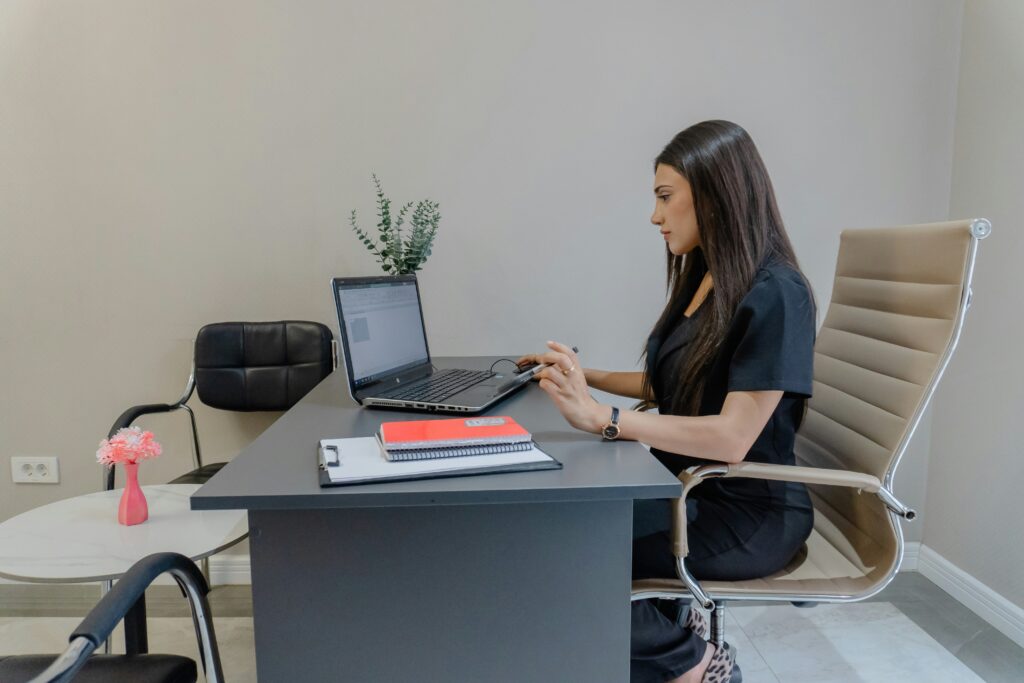
Your workstation should be logically arranged to support your body’s natural alignment. An ergonomic setup is not a luxury; it is a necessity for preventing repetitive strain injuries.
- Monitor Height: The top third of your screen should be at eye level to prevent “text neck.”
- Chair Support: Your lower back (lumbar) should be supported, maintaining its natural curve.
- Elbow Angle: Your arms should rest at a 90-degree angle to reduce strain on the wrists and shoulders. By adjusting your environment, you reduce the “mechanical stress” on your joints before it even begins.
4. The Core Logic of Spinal Stability
Many people are surprised to learn that a strong core is the best defence against desk-related back pain. Your core muscles act as a natural corset for your spine. When these muscles are weak, your vertebrae take the full load of your body weight while sitting. A logical core-strengthening routine provides the internal support needed to maintain an upright position without conscious effort. At FitCoreLogic, we teach professionals how to “engage” their deep core muscles while working to protect their spinal discs.
5. Movement Breaks: The Logic of “Micro-Recovery”
The human body was not designed to stay in one position for hours on end. No matter how ergonomic your chair is, the best posture is your next posture. The logic of “Micro-Recovery” involves taking short, 2-minute movement breaks every hour. These breaks reset your nervous system, improve blood circulation, and prevent your muscles from “locking” into a hunched position. Simple stretches like the “Chest Opener” or “Seated Cat-Cow” can reverse hours of slouching in just a few moments.
6. Mental Focus and Postural Alignment
There is a fascinating psychological logic behind how we sit. Research suggests that an upright, open posture reduces levels of cortisol (the stress hormone) and increases feelings of confidence and alertness. Conversely, a slumped posture can lead to feelings of lethargy and “brain fog.” For the busy professional, maintaining good posture is a performance hack—it ensures that your brain receives maximum oxygen and that you project an image of authority and energy in every meeting.
| Common Problem | The Resulting Pain | The Logical Fix | Recommended Stretch/Exercise |
| Forward Head | Neck Pain & Headaches | Bring ears over shoulders | Chin Tucks |
| Rounded Shoulders | Upper Back Tension | Strengthen mid-back | Face Pulls or Band Pull-aparts |
| Pelvic Tilt (Slouch) | Lower Back Ache | Engage core & glutes | Glute Bridges |
| Tight Hips | Knee & Back Issues | Stretch the hip flexors | Couch Stretch |
Frequently Asked Questions (FAQs)
Q: Are standing desks better than sitting desks?
A: Standing desks are a great tool, but the logic is to alternate. Standing all day can cause foot and lower back fatigue. The ideal ratio is changing your position every 30–60 minutes.
Q: How do I know if my posture is “bad” if I don’t have pain yet?
A: Check your side profile in a mirror. If your ears are forward of your shoulders or your palms face behind you rather than toward your thighs, your posture needs logical adjustment.
Q: Can I fix years of bad posture?
A: Yes! The body is remarkably adaptable. Through consistent strength training and intentional stretching, you can “re-train” your nervous system and muscles to hold a healthier position.
Q: Does wearing a posture corrector harness help?
A: Generally, no. These harnesses do the work for your muscles, which makes them even weaker over time. It is logically better to strengthen your own “internal harness” through core and back exercises.
About the Author